
Run every job
by the numbers.
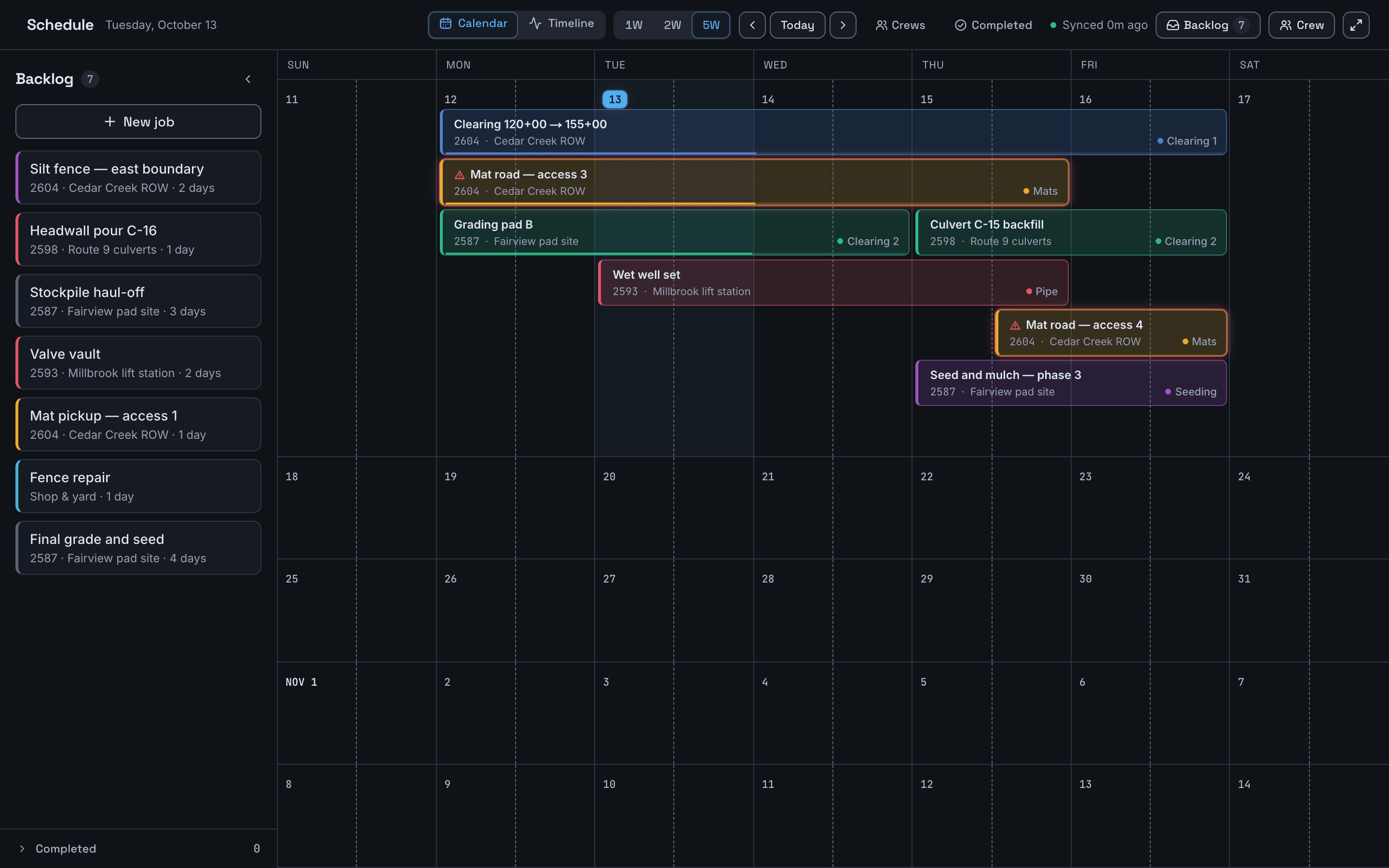
Verax puts estimating, timesheets, payroll, equipment, fuel and inspections in one system, so the number on the screen matches the work on the ground.
As of October 13, 2026.
One screen.
The whole operation.
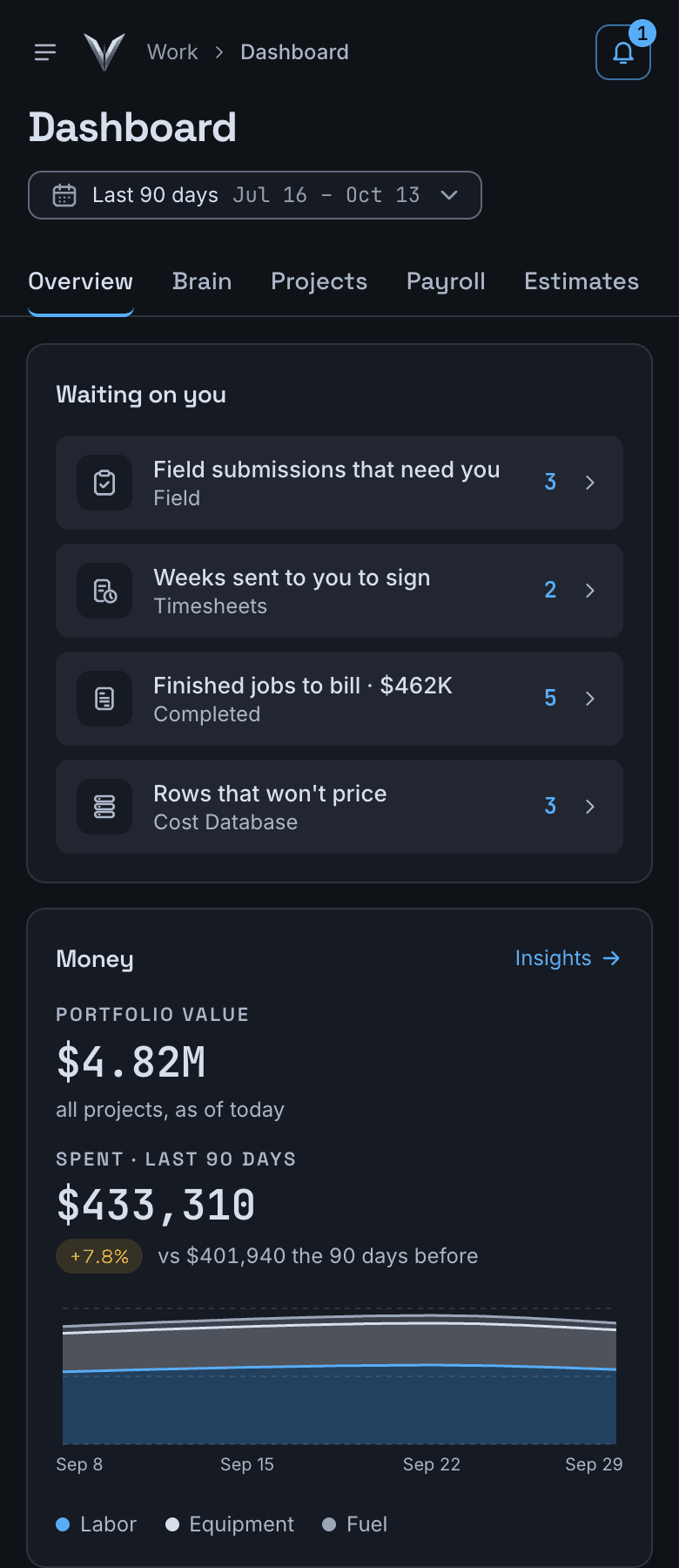
Actuals against the estimate, that day
Every crew hour, fuel receipt and rental day lands on the job it belongs to. When a job starts leaking, you see it before closeout.
Field to payroll, typed once
Hours come in from the crew's phones. The office approves the week and sends it. Nobody keys a timesheet twice.
Estimates priced from your own cost history
Verax breaks the job down; your rates price it. A missing rate is flagged, never guessed.
The crew’s half
is an app.
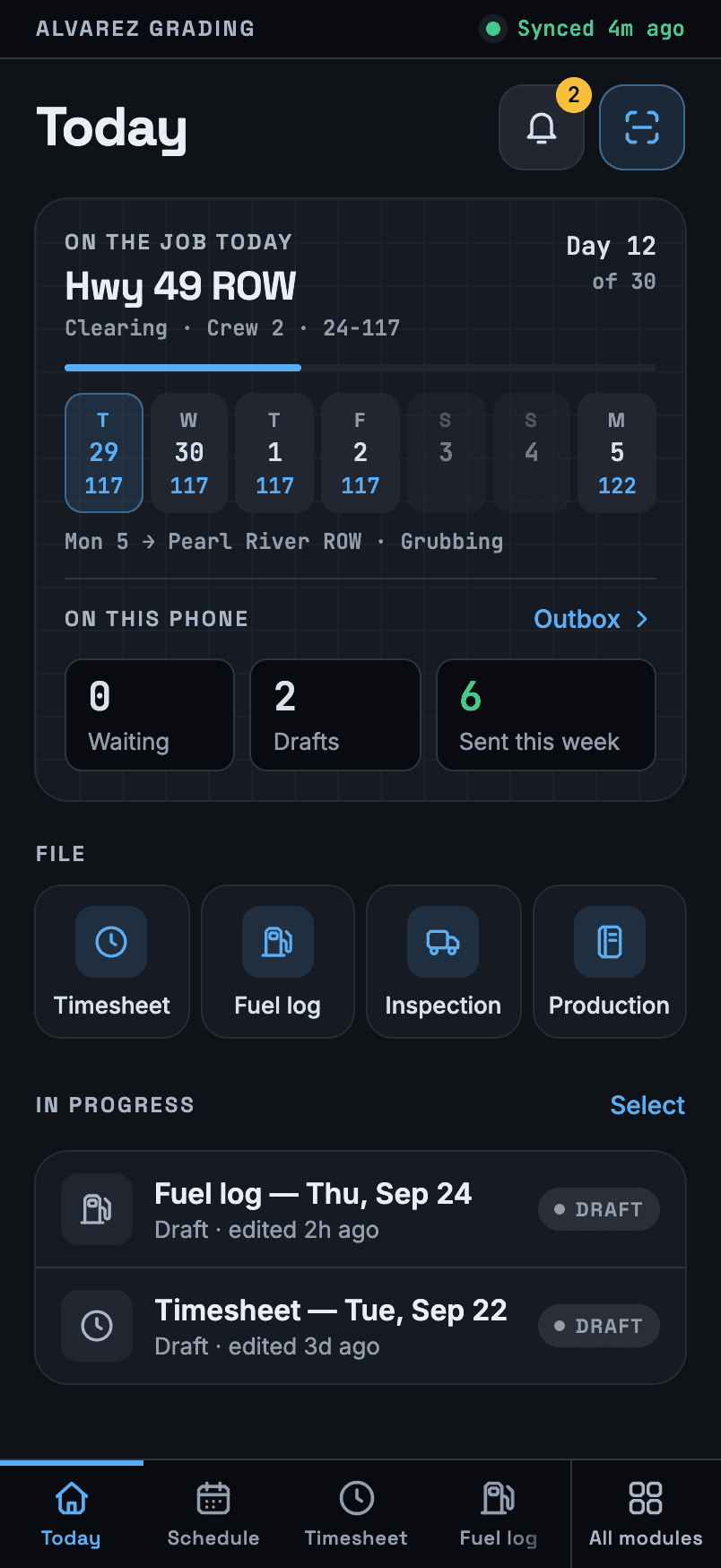
Hours, fuel and equipment from the cab
Big targets, one job a day, the forms the crew files most up front.
Inspections with photos
A walk-around takes a minute. A machine that goes down tells the office why.
No signal, no problem
It keeps working offline and sends when the phone is back in range.
English and Spanish
It follows the phone's language.
Real operations
run on it.
Right-of-way and sitework
Spreads, crews and iron across a line that moves every day.
Pits, plants and iron
Production, fuel and inspections for a fleet that never leaves the gate.
The waterline fleet
Where every barge is, what it carries and what it is waiting on.
Each one runs on its own address, with its own database. Nobody else is in your system.
Three steps.
No spreadsheets.
- 1
Estimate
Start from your cost history, not a blank database. The bid is a number you can defend line by line.
- 2
Run
Crews log the day on their phones. Equipment, fuel and inspections land on the job as they happen.
- 3
Close out
Approve the week, send payroll, and see what the job really cost against what you bid.
Bring a live job. We’ll show you what it’s hiding.
Twenty minutes with your real numbers. Onboarding starts from your cost history, not a blank database.